HOBART 770890 Auto-Darkening Welding Helmet Review (2026): A Spec-Based Look
As an Amazon Associate we earn from qualifying purchases. Links on this page are affiliate links.
This hobart 770890 auto darkening welding helmet review covers the Hobart Large Auto-Darkening Welding Helmet. It is a large, black unit weighing 1.25 pounds. The listing highlights two defining specs: a 9.3-inch widescreen viewing area and four independent arc sensors. These features aim to provide continuous UV and IR protection. The helmet uses PureColor Lens technology for clearer visibility. You get analog controls for shade, sensitivity, and delay adjustments. This model includes a weld-to-grind mode. It is designed for users who need dependable arc detection. The large size fits most headgear. The weight is moderate for all-day use. This spec-based look explains how these details affect your work.
What stands out
- 9.3-inch PureColor widescreen viewing area for clearer weld visibility
- Four independent arc sensors for quick and reliable auto-darkening
- Weld-to-Grind mode that prevents lens darkening during grinding tasks
- Analog knobs for adjusting shade, sensitivity, and delay settings
Who it fits
Good fit for
You should consider this helmet if you prioritize a large viewing area and precise analog adjustments. The four arc sensors offer reliable detection for various welding applications. The weld-to-grind mode is useful if you frequently switch between welding and grinding tasks. The large size accommodates different headgear comfortably. Users who prefer physical knobs over digital displays will appreciate the straightforward control layout. This setup suits those who want continuous protection and clear, accurately colored views of their work environment.
Who should skip it
You might want to look at another option if you prefer lightweight gear. This helmet weighs 1.25 pounds, which is moderate but not the lightest. If you need digital controls or preset memory functions, this model uses analog knobs only. The listing does not mention a battery life specification, so you should check power requirements elsewhere. If you require a smaller, more compact fit, the large size may feel bulky. Users seeking advanced features like auto-shade adjustment or solar charging should explore other models.
Verdict: This helmet offers a large viewing area and reliable arc detection for steady performance. It suits welders who value analog controls and a wide field of view.
Key specs explained for this helmet
9.3-inch widescreen viewing area
This dimension refers to the clear lens surface you look through while welding. A wider view allows you to see more of your workpiece and the surrounding environment without moving your head as much. This helps you maintain better alignment and precision on long seams. If you weld large structures or need to track a welding pool closely, this size reduces blind spots compared to smaller lenses.
4 independent arc sensors
The listing states the helmet uses four separate sensors to detect the welding arc. More sensors generally mean faster and more reliable triggering of the darkening filter. This reduces the chance of the lens failing to darken during a strike, which protects your eyes from harmful light. When comparing helmets, more sensors often indicate better performance in windy conditions or difficult angles where arc detection can be tricky.
Weld to Grind mode
This feature lets you switch the lens state without removing the helmet. In grind mode, the lens stays clear, allowing you to see sparks and the grinding surface clearly. This prevents the lens from darkening unnecessarily while you prepare your workpiece. You can switch back to weld mode instantly. This saves time and keeps your workflow smooth by eliminating the need to lift the helmet for grinding tasks.
Analog controls
The helmet uses physical knobs to adjust shade, sensitivity, and delay settings. Analog controls offer tactile feedback and do not require batteries to change basic settings. You can fine-tune the response speed and darkness level with a turn of a knob. This is useful for welders who prefer direct manual adjustments over digital menus. It ensures settings remain consistent even if the power system has issues.
Design and Build Overview
The Hobart 770890 is a large, black welding helmet. According to the listing, it measures 14 inches in width, 12 inches in height, and 11.8 inches in length. This substantial footprint provides a broad protective shell. The unit weighs 1.25 pounds. That mass suggests a sturdy construction, though it may feel heavy during extended overhead work. You get a solid, durable frame rather than a lightweight plastic shell.
The design includes analog controls for shade, sensitivity, and delay. You adjust these with simple knobs. This layout avoids complex digital menus. It allows for quick changes even when wearing gloves. The listing notes an auto-on/off power control. This feature triggers the lens at the strike of an arc. It helps conserve battery life when you are not actively welding.
The helmet also features a switch between Weld and Grind modes. In grind mode, the lens remains clear. This prevents the need to swap helmets when switching tasks. The pure color lens technology is part of the optical design. It aims to provide accurate color rendering. This helps you see the weld pool and work environment more clearly. The four independent arc sensors are embedded in the front. They ensure the lens darkens precisely when needed. The overall build focuses on practical functionality and safety for various welding applications.
Setup and Everyday Use Guide
Setting up this Hobart helmet begins with understanding its analog controls. You adjust shade, sensitivity, and delay settings by turning physical knobs. This manual approach means you do not need to navigate digital menus or connect to a smartphone app. You simply twist the dials to match your specific welding application. The unit features an auto-on and off power control. This mechanism triggers the lens to activate the moment it detects an arc strike. You do not need to manually flip the helmet down to start welding. The four independent arc sensors work together to ensure quick detection. This setup helps the lens darken precisely when needed for your safety.
In daily use, the large size and 9.3-inch widescreen viewing area define your experience. The PureColor Lens technology aims to provide an accurately colored view of your weld and work environment. This clarity helps improve your precision and weld quality. You benefit from continuous UV and IR protection during every use. The helmet also includes a versatile weld and grind mode. You can switch between these modes to streamline your workflow. The grind mode prevents the lens from darkening, allowing for clear and visible grinding without changing helmets. This feature helps boost your productivity by reducing downtime. The 1.25-pound weight and 14-inch width provide a substantial protective shell. You wear this large black unit for extended periods. The analog controls remain accessible for quick adjustments on the job site.
Before You Buy This Hobart Helmet
You should verify that your existing headgear fits this large, black helmet. The 14-inch width and 12-inch height require sufficient clearance. Check if your current straps accommodate the 1.25-pound weight comfortably over long shifts. Since this model uses analog knobs for shade, sensitivity, and delay, you do not need batteries for the display, but you must ensure the arc sensors remain clean. Keep the 9.3-inch PureColor lens free of scratches to maintain weld precision. This helmet suits users who prefer manual adjustments over digital interfaces. It fits alongside other options in Welders for those prioritizing wide visibility and reliable arc detection. Consider your typical welding position to ensure the large viewing area remains unobstructed. Regularly inspect the four independent sensors for dust buildup that could delay darkening. Proper maintenance ensures the auto-on/off feature triggers correctly. This practical approach helps you get the most from the listing's specifications.
Check before you buy
- Confirm your headgear fits the 14-inch wide shell.
- Ensure you are comfortable with analog knob controls.
- Check that the 1.25-pound weight suits your shift length.
- Verify your welding position allows full use of the 9.3-inch view.
- Keep arc sensors clean for reliable auto-darkening response.
The product at a glance
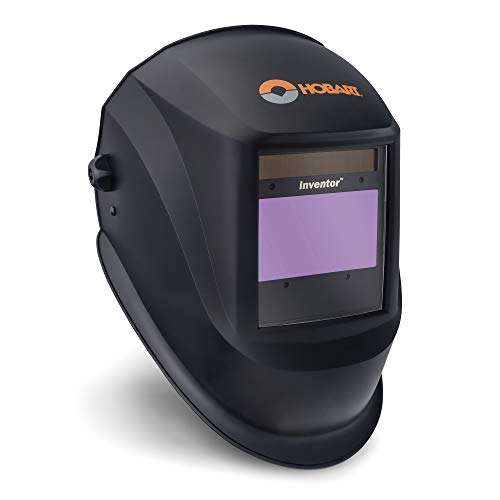
Hobart Large Auto-Darkening Welding Helmet
Best for: welders needing large view and analog controls
- Dimensions
- 11.8 × 14 × 12 inches
- Weight
- 1.25 pounds
View on Amazon: Hobart Large Auto-Darkening Welding Helmet Affiliate link
The Hobart 770890 is a large, black auto-darkening welding helmet designed for clear visibility and safety. It features PureColor Lens technology and a 9.3-inch widescreen viewing area. Four independent arc sensors trigger the lens quickly upon arc strike. You can switch between Weld and Grind modes easily. Analog knobs allow you to adjust shade, sensitivity, and delay settings for different welding applications.
Pros
- 9.3-inch widescreen viewing area with PureColor Lens technology
- Four independent arc sensors for reliable detection
- Switchable Weld and Grind modes
- Analog controls for shade, sensitivity, and delay
- Continuous UV and IR protection
Cons
- Larger physical dimensions may feel bulky
- Analog controls limit precision compared to digital
- Heavier at 1.25 pounds
Good fit if
- You need a large viewing area for precision work
- You prefer simple analog adjustments
- You require reliable arc detection with four sensors
Skip if
- You want digital controls for fine-tuning
- You need a lightweight helmet for long wear
- You prefer a compact, small-size design
Verdict: Hobart 770890 Large Auto-Darkening Helmet suits welders who value a large, clear view and simple analog adjustments. It fits those who do not mind a slightly heavier build for enhanced stability and visibility.
Specifications side by side
| Spec | Hobart Large Auto-Darkening Welding Helmet |
|---|---|
| Dimensions | 11.8 × 14 × 12 inches |
| Weight | 1.25 pounds |
| Size | Large |
| Color | Black |
| Model | 770890 |
Frequently asked questions
Is the Hobart 770890 helmet heavy for long welding sessions?
The unit weighs 1.25 pounds, which is a moderate weight for a full-face helmet. You should check if your existing headgear straps can support this mass comfortably. The large shell provides stability, but the weight may cause fatigue during extended shifts if the suspension is not adjustable.
Does the Hobart 770890 have a wide viewing area?
Yes, it features a 9.3-inch widescreen viewing area. This large clear lens surface allows you to see more of your workpiece and the surrounding environment. You do not need to move your head as much to track your weld puddle, which improves precision and comfort.
How many sensors does the Hobart 770890 use?
This helmet uses four independent arc sensors. These sensors detect the welding arc to trigger the auto-darkening lens quickly. Multiple sensors help ensure the shade activates reliably regardless of the angle from which the arc light hits the helmet, providing consistent protection during complex welding positions.
Can I adjust the shade and sensitivity on this helmet?
You can adjust these settings using analog knobs. The listing confirms physical controls for shade, sensitivity, and delay. You do not need to navigate digital menus or connect to a smartphone app. This manual approach allows for quick, tactile adjustments directly on the helmet during setup.
What are the physical dimensions of the Hobart 770890 helmet?
The helmet measures 14 inches in width, 12 inches in height, and 11.8 inches in length. This large footprint provides a broad protective shell. You must verify that your current headgear fits within these dimensions to ensure proper clearance and secure attachment before purchasing.
Is the Hobart 770890 suitable for welders who prefer simple controls?
Yes, it is designed for users who value simple analog adjustments. The physical knobs allow you to set shade, sensitivity, and delay without digital interfaces. This suits welders who want straightforward operation and do not mind a slightly heavier build in exchange for enhanced visibility and stability.