What Is Current Type? A Guide for Welders Buyers (2026)
As an Amazon Associate we earn from qualifying purchases. Links on this page are affiliate links.
Understanding Current Type for Welders
Current type explained is the first step in selecting a welding power source. This spec defines the direction of electrical flow during the welding process. You will see two main categories in product listings: AC and DC. Each behaves differently and suits specific tasks.
Alternating current, or AC, switches direction rapidly. The needle moves back and forth many times per second. This reversal helps break up oxide layers on certain metals. Aluminum and magnesium are prime examples. The oxide layer on aluminum is tough and must be removed for a strong bond. AC current provides this cleaning action. If you plan to weld aluminum, an AC output is essential. Many specialized TIG welders offer pure AC modes for this reason.
Direct current, or DC, flows in one steady direction. It is the standard for most steel and stainless steel welding. DC provides a more stable arc than AC. It also offers better control over the weld puddle. You will find DC in most MIG and stick welders. Some machines offer DCEN (direct current electrode negative) or DCEP (direct current electrode positive). The choice affects heat input and penetration depth. DCEN puts more heat into the workpiece. DCEP puts more heat into the electrode.
Some modern inverters combine both types. These multi-process machines switch between AC and DC automatically or via a dial. This versatility allows you to weld steel with DC and aluminum with AC using one unit. When browsing listings, check the technical specifications section. Look for terms like "AC/DC" or "Pulsed AC." Avoid guessing based on the product name alone. The data sheet is your only reliable source.
Choosing the right current type ensures proper fusion and weld quality. Using DC on aluminum without AC cleaning will likely fail. Using AC on steel may cause excessive spatter. Match the current type to your material. This simple check prevents costly mistakes and wasted filler metal.
AC/DC Versus DC Current Types
AC/DC
This setting offers dual functionality, allowing you to switch between alternating current and direct current. AC current is essential for welding aluminum because it provides the cleaning action needed to remove oxide layers. DC current is better for steel and stainless steel, offering a stable arc and deeper penetration. Machines like the YESWELDER 200A AC/DC TIG Welder let you handle both materials with one unit. You gain versatility, but you may pay more for the extra circuitry. If you work with multiple metals, this flexibility saves you from buying separate machines.
DC
Direct current machines are designed specifically for steel and stainless steel fabrication. They provide a consistent, stable arc that is easier to control for thin materials. These units often focus on features like pulse control and digital precision rather than aluminum cleaning. The TOOLIOM 200A Dual Voltage DC Pulse TIG Welder is a clear example, built for steel work. You get a simpler, often more affordable machine optimized for ferrous metals. However, you cannot weld aluminum with this current type. If your work is limited to steel, a DC-only unit may offer better value and specialized performance.
Is Current Type Worth Your Attention
Who needs it
You need this spec if you weld multiple base metals. AC/DC machines handle aluminum and steel. AC cleans oxide layers on aluminum. DC penetrates steel deeply. If your projects switch materials, dual current saves space and money. You avoid buying separate tools. DC-only units work for steel and stainless steel. They are common and reliable. But they fail with aluminum. You cannot weld that material. Check your typical jobs. Do you mix metals often? If yes, AC/DC is essential. It offers flexibility. You adapt to different tasks without changing equipment. This versatility matters for hobbyists and pros. They face varied demands. Single-current machines limit your scope. You might miss out on aluminum work. That is a significant gap. Dual current closes it. You gain capability. You reduce clutter. You streamline your workflow. This spec defines your material options. It is foundational for versatility.
Who can skip it
You can ignore this if you only weld steel. DC current is standard for mild steel. It provides stable arcs. It is easier to learn. You do not need AC capability. AC machines are often heavier. They cost more. You save weight and cash by skipping AC/DC. Focus on amperage instead. That determines penetration depth. You need enough power for your thickness. Current type is secondary. It does not affect steel quality. DC works perfectly. You get cleaner beads. You face fewer issues. Stick to DC. It is simpler. You avoid complex controls. You reduce maintenance. Your projects stay straightforward. This choice streamlines your purchase. You prioritize power over versatility. That is smart for single-material users. You avoid paying for unused features. You keep things simple. You weld what you know. You avoid confusion. This path is efficient. You save time. You save effort. You focus on skill. That is the real value.
Current Type Glossary
Alternating Current
Electrical flow that reverses direction periodically. This type cleans oxide layers on aluminum. It is the standard choice for welding non-ferrous metals like magnesium or titanium alloys effectively.
Direct Current
Electrical flow moving in one constant direction. This type provides deep penetration in steel. It is the preferred method for welding most ferrous metals and stainless steel applications.
AC/DC Switch
A feature allowing you to toggle between current types. This flexibility lets one machine handle aluminum and steel. It is ideal for shops working with multiple base metals.
Oxide Layer
A tough surface film on aluminum that blocks heat. AC current breaks this layer through cathodic cleaning. This action ensures proper fusion and a clean weld bead.
Polarity
The direction of current flow between electrode and workpiece. Changing polarity affects heat distribution and penetration depth. Correct polarity is critical for achieving strong, consistent welds.
Cathodic Cleaning
A chemical action provided by AC current. It removes surface oxides from aluminum before melting. This process is essential for creating clean, defect-free joints on reactive metals.
Penetration Depth
How far the weld fuses into the base metal. DC current typically offers deeper penetration than AC. This spec determines the strength and integrity of the final joint.
Quick picks
| # | Product | Best for | Price |
|---|---|---|---|
| 1 | YESWELDER 200A AC/DC TIG Welder | Welding aluminum and steel with pulse control | Check price of YESWELDER 200A AC/DC TIG Welder on Amazon |
| 2 | ARCCAPTAIN 200A AC/DC TIG Welder | Aluminum and steel TIG welding with pulse control | Check price of ARCCAPTAIN 200A AC/DC TIG Welder on Amazon |
| 3 | Weldpro 200A Dual-Voltage TIG Stick Welder | Aluminum welding with dual voltage flexibility | Check price of Weldpro 200A Dual-Voltage TIG Stick Welder on Amazon |
| 4 | TOOLIOM 200A Dual Voltage DC Pulse TIG Welder | DC steel fabrication and pulse TIG work | Check price of TOOLIOM 200A Dual Voltage DC Pulse TIG Welder on Amazon |
| 5 | Sunstac 250A AC/DC Pulse TIG Welder | High-amperage aluminum welding with digital control | Check price of Sunstac 250A AC/DC Pulse TIG Welder on Amazon |
| 6 | S Simder 250A Dual Voltage Pulse TIG Welder | Thin aluminum and stainless steel fabrication | Check price of S Simder 250A Dual Voltage Pulse TIG Welder on Amazon |
Our 6 picks

YESWELDER 200A AC/DC TIG Welder
Best for: Welding aluminum and steel with pulse control
- Current Type
- AC/DC (what this guide is about)
- Welding Process
- TIG, Stick
- Amperage
- 200A
- Input Voltage
- Dual Voltage
- Material
- Aluminum
- Features
- Pulse, Digital Display
View on Amazon: YESWELDER 200A AC/DC TIG Welder Affiliate link
The YESWELDER 200A AC/DC TIG Welder handles aluminum and steel with 200 amps of power. It supports AC and DC modes, including pulse options for better control. The unit features a large LED display and auto-sensing dual voltage for easy setup. Weighing 7.47 kg, it is portable for shop or field use. This machine suits hobbyists and professionals needing versatile metal welding capabilities.
Pros
- 200A amperage output for diverse projects
- AC/DC current types for aluminum and steel
- Large LED display for clear parameter visibility
- Auto-sensing dual voltage input (110V/220V)
- 7-in-1 versatility including pulse and spot welding
Cons
- Foot pedal is not included in the package
- Maximum aluminum thickness limited to 1/8 inch
- Weighs 7.47 kg, which is heavier than some compact units
Good fit if
- You need to weld both aluminum and steel
- You want pulse TIG capabilities for better control
- You prefer a large LED display for settings
Skip if
- You already own a dedicated aluminum welder
- You require a foot pedal included in the box
- You need to weld aluminum thicker than 1/8 inch
Verdict: YESWELDER 200A AC/DC TIG Welder fits users who need a single machine for both aluminum and steel with pulse control. It is a solid choice for those who value a large display and dual voltage flexibility.

ARCCAPTAIN 200A AC/DC TIG Welder
Best for: Aluminum and steel TIG welding with pulse control
- Current Type
- AC/DC (what this guide is about)
- Welding Process
- TIG, Stick, Multi-Process
- Amperage
- 200A
- Input Voltage
- Dual Voltage
- Material
- Aluminum
- Features
- Pulse, Spot Welding
View on Amazon: ARCCAPTAIN 200A AC/DC TIG Welder Affiliate link
This ARCCAPTAIN TIG200PACDC unit offers 200 amps of AC/DC current for welding aluminum and steel. It supports seven methods including pulse and square wave options for precise heat control. The large LED display shows parameters clearly. You get adjustable settings for pre-flow and frequency. The machine weighs 42.7 pounds. It suits welders needing versatile alloy support and digital control.
Pros
- 200A AC/DC current for aluminum and steel
- Seven welding methods including pulse and square wave
- Large LED display for clear parameter visibility
- Adjustable AC frequency and balance settings
- Lightweight 42.7-pound build for portability
Cons
- Foot pedal remote control is not included
- Heavier than some competitors at 42.7 pounds
- Spot welding TIG method may have limited utility
Good fit if
- You weld both aluminum and steel regularly
- You need precise heat control for thin metals
- You prefer digital parameter adjustment over analog knobs
Skip if
- You require a foot pedal included in the box
- You only weld mild steel and do not need AC
- You prioritize the lightest possible machine under 30 pounds
Verdict: ARCCAPTAIN TIG200PACDC 200A AC/DC Welder fits welders who need versatile AC/DC capabilities for aluminum and steel with precise digital controls. It is a solid choice for those who value waveform flexibility over included accessories.
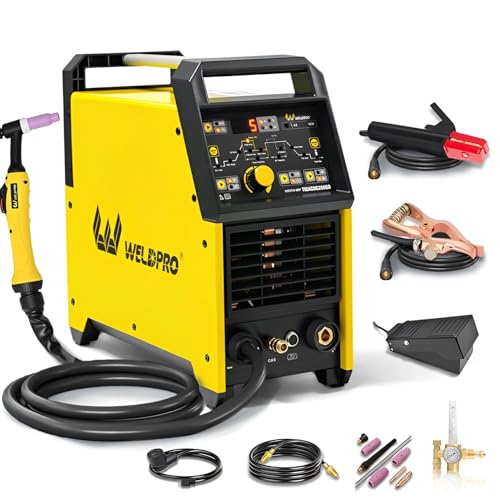
Weldpro 200A Dual-Voltage TIG Stick Welder
Best for: Aluminum welding with dual voltage flexibility
- Current Type
- DC (what this guide is about)
- Welding Process
- TIG, Stick, Multi-Process
- Amperage
- 200A
- Input Voltage
- Dual Voltage
- Material
- Aluminum
- Features
- Pulse, Foot Pedal
View on Amazon: Weldpro 200A Dual-Voltage TIG Stick Welder Affiliate link
The Weldpro 200A handles AC and DC TIG welding for aluminum and steel. It offers dual voltage input for flexible power sources. You get pulse control, adjustable frequency, and a foot pedal for precise amperage changes. The unit includes a stick welding mode. This five-in-one machine weighs 61.8 pounds. It suits fabricators who need portable, multi-process capability for various metals.
Pros
- AC/DC TIG and Stick welding modes
- 110V/220V dual voltage input
- Adjustable pulse frequency up to 200Hz
- Includes foot pedal for hands-free control
- IGBT inverter technology for stable arc
Cons
- Heavier than some competitors at 61.8 pounds
- 40% duty cycle at full 200A output
- No remote control panel included
Good fit if
- You weld aluminum and need AC balance control
- You work in locations with varying power sources
- You want precise heat input management via pulse
Skip if
- You need a lightweight unit for frequent travel
- You require a higher duty cycle for continuous production
- You prefer stick welding only without TIG features
Verdict: Weldpro 200A AC/DC TIG Welder delivers solid multi-process performance for aluminum and steel fabrication. It fits buyers who value dual voltage flexibility and precise pulse control over ultra-lightweight portability.

TOOLIOM 200A Dual Voltage DC Pulse TIG Welder
Best for: DC steel fabrication and pulse TIG work
- Current Type
- DC (what this guide is about)
- Welding Process
- TIG, Stick, Multi-Process
- Amperage
- 200A
- Input Voltage
- Dual Voltage
- Features
- Pulse, Spot Welding, Digital Display
View on Amazon: TOOLIOM 200A Dual Voltage DC Pulse TIG Welder Affiliate link
The TOOLIOM 200A DC TIG welder delivers dual-voltage input for flexible power sources. It features pulse TIG capabilities and a digital display for precise parameter control. The unit includes hot start, arc force, and anti-stick functions in stick mode. This machine suits users who need reliable DC output for stainless steel and alloy steel fabrication without the complexity of AC aluminum welding.
Pros
- 200A output capacity for robust performance
- Dual voltage input (110V/220V)
- Pulse TIG mode with independent frequency control
- Large digital display for real-time monitoring
Cons
- Limited to DC current type, excluding aluminum welding
- Foot pedal is not included in the base unit
- No AC/DC capability for mixed-metal projects
Good fit if
- You primarily weld stainless steel or carbon steel
- You require pulse TIG settings for thin materials
- You need dual-voltage compatibility for home or shop use
Skip if
- You need to weld aluminum or magnesium alloys
- You require AC/DC current type versatility
- You want a complete kit with included foot pedal
Verdict: The TOOLIOM 200A DC TIG Welder with Pulse fits fabricators focused on steel and alloy work who value digital control and pulse features. It is not suitable for aluminum welding tasks.

Sunstac 250A AC/DC Pulse TIG Welder
Best for: High-amperage aluminum welding with digital control
- Current Type
- AC/DC (what this guide is about)
- Welding Process
- TIG, Stick
- Amperage
- 250A
- Input Voltage
- Dual Voltage
- Material
- Aluminum
- Features
- Pulse, Spot Welding, Foot Pedal
View on Amazon: Sunstac 250A AC/DC Pulse TIG Welder Affiliate link
The Sunstac 250A AC/DC TIG welder handles aluminum and steel with up to 250 amps. It features dual voltage for 110V or 220V input and includes pulse and spot modes for precise control. The LCD screen displays current and voltage settings clearly. You get AC balance adjustments for aluminum welding. This machine suits users needing high amperage and digital readouts for complex metal work.
Pros
- 250A output capacity for thicker materials
- LCD digital screen for clear parameter visibility
- Pulse and spot TIG modes for precision
- Dual voltage 110V/220V compatibility
Cons
- AC mode current measurement is inaccurate
- Foot pedal remote control is not included
- AC balance can cause current variations
Good fit if
- You need 250A for thick aluminum
- You want an LCD display for settings
- You require dual voltage flexibility
Skip if
- You need accurate AC current readings
- You want a foot pedal included
- You prefer LED screens over LCD
Verdict: Sunstac 250A AC/DC TIG Welder fits welders who need high amperage and digital clarity for aluminum projects, though you must account for its measurement quirks and missing pedal.
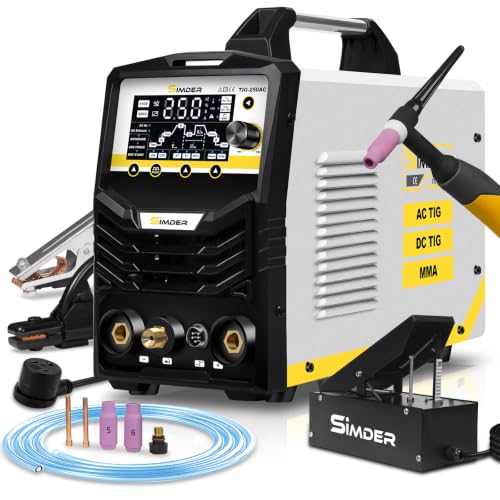
S Simder 250A Dual Voltage Pulse TIG Welder
Best for: Thin aluminum and stainless steel fabrication
- Current Type
- AC/DC (what this guide is about)
- Welding Process
- TIG
- Amperage
- 250A
- Material
- Aluminum
- Features
- Pulse, Foot Pedal
- Dimensions
- 16 × 6.7 × 12.8 inches
View on Amazon: S Simder 250A Dual Voltage Pulse TIG Welder Affiliate link
The SSIMDER 250A AC/DC TIG Welder delivers dual-voltage flexibility and pulse control for aluminum and stainless steel. It includes a foot pedal for hands-free amperage adjustment and offers synergic mode for quick setup. This portable unit weighs 17.4 pounds and measures 16 inches long. It suits fabricators needing precise thin-metal control without complex configuration.
Pros
- 250A output for aluminum and stainless steel
- Includes foot pedal for real-time current control
- Dual 110V/220V voltage compatibility
- Synergic mode for simplified parameter setting
Cons
- Heavier than competitors at 17.4 pounds
- Larger footprint at 16 inches long
- Foot pedal cord limited to 10 feet
Good fit if
- You need precise control over thin aluminum sheets
- You want hands-free amperage adjustment
- You work in spaces with 220V outlets
Skip if
- You prioritize ultra-portable equipment under 15 pounds
- You only weld thick carbon steel
- You need a compact unit under 14 inches long
Verdict: SSIMDER 250A AC/DC TIG Welder fits fabricators who value precise thin-metal control and hands-free operation over maximum portability. It is a solid choice for workshop projects requiring dual-voltage flexibility.
Specifications side by side
| Spec | YESWELDER 200A AC/DC TIG Welder | ARCCAPTAIN 200A AC/DC TIG Welder | Weldpro 200A Dual-Voltage TIG Stick Welder | TOOLIOM 200A Dual Voltage DC Pulse TIG Welder | Sunstac 250A AC/DC Pulse TIG Welder | S Simder 250A Dual Voltage Pulse TIG Welder |
|---|---|---|---|---|---|---|
| Welding Process | TIG, Stick | TIG, Stick, Multi-Process | TIG, Stick, Multi-Process | TIG, Stick, Multi-Process | TIG, Stick | TIG |
| Amperage | 200A | 200A | 200A | 200A | 250A | 250A |
| Input Voltage | Dual Voltage | Dual Voltage | Dual Voltage | Dual Voltage | Dual Voltage | not stated |
| Material | Aluminum | Aluminum | Aluminum | not stated | Aluminum | Aluminum |
| Current Type | AC/DC | AC/DC | DC | DC | AC/DC | AC/DC |
| Features | Pulse, Digital Display | Pulse, Spot Welding | Pulse, Foot Pedal | Pulse, Spot Welding, Digital Display | Pulse, Spot Welding, Foot Pedal | Pulse, Foot Pedal |
| Weight | not stated | 42.7 pounds | 61.8 pounds | not stated | not stated | 17.4 pounds |
| Dimensions | not stated | not stated | 17.6 × 7.9 × 16.2 inches | not stated | not stated | 16 × 6.7 × 12.8 inches |
| Model | TIG-200P ACDC | ARCCAPTAIN TIG200PACDC | TIG200-KT26 Torch | TL-200T | TIG-250 TP ACDC | TIG-250AC AC TIG Welder |
| Size | not stated | TIG200P ACDC | 61.8 Pounds | 200A DC TIG Welder | 250A AC/DC Pulsed TIG | 16 x 6.7 x 12.8 inches |
| Color | not stated | Red | not stated | Yellow | Black | Tig-250ac a |
Frequently asked questions
Does AC current weld aluminum better than DC?
Yes. Alternating current provides a cleaning action that removes oxide layers from aluminum surfaces. Direct current lacks this specific benefit. Machines labeled AC/DC allow you to switch modes. This flexibility lets you tackle aluminum projects effectively while still welding other metals.
Can I weld steel with an AC/DC welder?
Yes. Direct current mode is ideal for steel fabrication. It provides deep penetration and stable arcs for ferrous metals. An AC/DC unit lets you switch from aluminum to steel instantly. You do not need separate machines for each material type.
What is the difference between AC and DC current?
AC reverses direction periodically to clean oxides on aluminum. DC flows in one constant direction for deep steel penetration. Your choice depends on the base metal. Aluminum requires AC cleaning action. Steel benefits from DC stability and focus.
Do I need AC/DC for a home workshop?
It depends on your materials. If you only weld steel, DC is sufficient. If you plan to work with aluminum, AC/DC is necessary. Dual current types save space by combining two functions. It is a practical choice for multi-material projects.
Which current type is best for TIG welding?
Both types are used in TIG welding. AC is standard for aluminum TIG work. DC is preferred for steel and stainless steel. Many modern TIG welders offer both. This ensures you can handle various fabrication tasks with a single power source.
Can DC current weld aluminum?
No. Direct current does not provide the cleaning action needed for aluminum. It leaves oxide layers intact, leading to poor weld quality. You must use AC or AC/DC current for aluminum. DC is strictly for ferrous metals like steel.
What does an AC/DC welder do?
An AC/DC welder switches between alternating and direct current. AC cleans aluminum oxides. DC penetrates steel deeply. This dual capability covers most common welding materials. You get versatility without buying separate machines for different metal types.